FERMA seeks enhanced legislative support as agency proposes N229.9bn for 2026 Budget
3 min read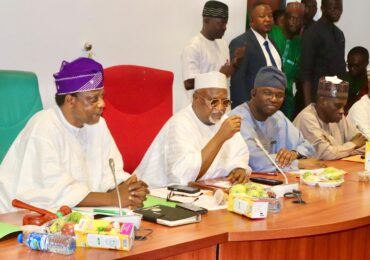
By Chris Ochayi
The Federal Roads Maintenance Agency (FERMA) has proposed a total budget of N229.999 billion for the 2026 fiscal year as part of efforts to strengthen road maintenance operations and improve connectivity across the country.
The proposed appropriation comprises N191 billion for capital expenditure, N5 billion for personnel costs, and N33 billion for overhead expenses.
Director Information and Public Relations at FERMA, Maryam Sanusi, fnipr, communicated the development through a statement issued on Thursday in Abuja.
The proposal she said was presented during the 2025 Appropriation Act performance review and 2026 budget defense before the Joint Senate and House Committees on FERMA.
Mrs. Sanus quoted the Minister of State for Works and Supervising Minister of FERMA, Hon. Bello Goronyo, Esq.,as saying while presenting the budget that although the Agency possesses the necessary technical expertise to effectively discharge its mandate, inadequate funding remains its primary constraint.
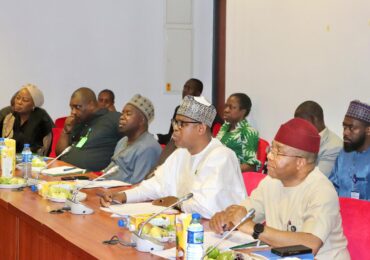
The Minister explained that project allocations in the 2026 proposal cut across all states of the Federation, reflecting FERMA’s commitment to equitable and strategic road maintenance nationwide.
“It is envisaged that, with your support, the implementation of the 2025 five percent fossil fuel surcharge, as provided under Section 159 of the New Task Force Act, will include FERMA in the distribution template.
This aligns with global best practices and will enable the Agency to more effectively fulfill its mandate,” the Minister stated.
Hon. Goronyo expressed appreciation to the Committees for their consistent oversight and support, describing the partnership between the Legislature and FERMA as critical to the Agency’s progress.
He appealed for sustained legislative backing to unlock FERMA’s full operational capacity and accelerate critical interventions on federal roads across all regions.
“With your approval, we can unlock FERMA’s full technical capacity, accelerate critical road interventions nationwide, and ensure that Nigeria’s roads become true engines for economic growth and national unity,” he added.
In his presentation, the Managing Director/Chief Executive Officer of FERMA, Engr. Chukwuemeka Agbasi, reiterated the funding challenges confronting the Agency and highlighted key performance indicators achieved in 2025.
According to Engr. Agbasi, FERMA accomplished the following within the review period: 200.82km of roads maintained 31,574.29 square metres of potholes patched 1,655.89km of roads made motorable 10,311 metres of drainage constructed 19 washouts reinstated 3 bridges maintained 4,013 streetlight poles installed
He, however, noted that several challenges continue to affect optimal performance, including budgetary releases falling short of required targets, distressed and aged pavements, road abuse, climate change-related emergencies—particularly in flood-prone areas—and security concerns in certain regions.
The Managing Director stressed the importance of harmonizing the national budget cycle with procurement processes to ensure that road projects are executed during the dry season, thereby enhancing timely delivery and cost-effectiveness.
The Chairman of the Senate Committee on FERMA, Sen. Sahabi Yau, the Chairman of the House Committee on FERMA, Hon. Engr. Aderemi Oseni and other members of the Committee commended the Agency for its visible efforts in maintaining federal roads across the country.
While acknowledging the need for increased funding, Hon. Oseni urged FERMA to further strengthen project delivery standards and ensure value for money. Sen. Yau encouraged the Agency to sustain its performance and strive for greater efficiency in response to feedback and appraisals from members of the National Assembly.
The proposed 2026 budget underscores FERMA’s strategic commitment to improving the condition of federal roads, enhancing national connectivity, and supporting economic growth through a safer and more resilient road infrastructure network.