
Benue Governor Urges Executive, Legislature Partnership To Tackle Climate Change Challenges
5 min read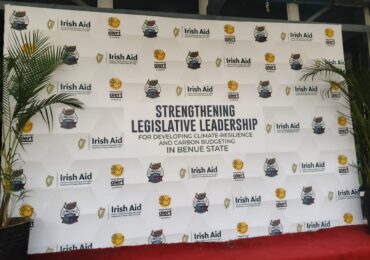
By Bridget Tikyaa
Governor Hyacinth Alia of Benue State has called for robust partnership between the Executive and Legislature to effectively confront climate risks and harness the opportunities of the green economy.
The governor, represented by his Principal Private Secretary, Dr Emmanuel Chenge, made the call while opening a one-day Training on Climate Change for Members of the state House of Assembly, on Monday in Abuja
He said the theme, Strengthening Legislative Leadership for Developing Climate Change, Resilience and Carbon Budgeting in Benue State, “speaks directly to one of the most critical challenges of our time; how we can protect our people, environment, and economy from the worsening impacts of climate change.”
Governor Alia said although the state government has taken some key steps to confront the challenges, a robust partnership with the legislature would fast track solutions to the problem.
He said the government has established the Benue State Council on Climate Change, with the mandate to coordinate and implement climate actions across the state, developed Climate Change Policy and Action Plan, which aligns with Nigeria’s Nationally Determined Contributions, strengthened early warning and flood response systems, and constructed extensive flood control structures especially in flood-prone areas.
Other steps taken by the government include deploying solar-powered panels to light-up streets in major cities across the state, promoting partnerships with development agencies, private sector actors, and civil society to mobilize climate finance and technical support, and promotion of sustainable agriculture, including support for extension services, climate-smart inputs, and water-efficient practices.
The governor said in spite of the efforts, Benue State still bears a disproportionate vulnerability to climate change.
“We have witnessed increasing frequency of floods in Makurdi, Agatu, Guma, Logo, Katsina-Ala and other riverine LGAs; erratic rainfall affecting crop yield; rising temperatures affecting water security, health outcomes, and rural livelihoods; degradation of forest landscapes, loss of biodiversity, and increased pressure on natural resources driven by population growth and poverty.
“These challenges threaten our agriculture-dependent economy, our infrastructure, and the wellbeing of our people. They therefore demand urgent, coordinated and visionary action.”
In this respect, the governor charged the legislature to deliver laws to support the executive in tackling the climate change crisis.
“Climate governance begins with strong laws, effective oversight, and a clear budgeting framework. Your role as members of the legislature is indispensable in the following ways:
“Strengthening the legal framework on climate change by ensuring that the Benue State Climate change Law is passed, gazetted, and should evolve to reflect global best practices, national priorities, and local realities. You also have power to legislate standards that will guide climate adaptation, mitigation, and resilience building.
“Working collaboratively with the Benue State Council on Climate Change to establish a Carbon Budgeting Framework that will provide a structured pathway for emission reduction, guiding ministries, department and agencies (MDAs) on targets that align with national and international commitments. Through legislation, you can also institutionalize carbon accounting, reporting, and verification systems.”
He also urged them to carry out legislation to ensure that Laws on land use, agro-climatic and watershed management, energy, and environmental protection reflect climate-smart principles, consistently provide oversight to ensure that funds allocated for resilience and environmental protection are used transparently and effectively, and periodically sensitise their constituents strengthen local knowledge, and promote practices such as tree planting, clean energy adoption, and sustainable land management.
“These efforts must be deepened and institutionalized. This is why today’s engagement with the legislature is so strategic,” he added.
Governor Alia reminded the lawmakers to what he termed as the
looming ecological crisis affecting livelihoods which necessitate action to build a resilient agricultural economy; protect citizens from climate-induced disasters; expand opportunities in carbon markets and climate finance; ensure sustainable urban and rural development; and position Benue State as a model of climate governance in Nigeria.
He believes that the training would serve as a foundational step toward transforming governance structures and empowering the lawmakers to deliver climate-responsive legislation, which should include
climate-responsive bills and amendments, rigorous oversight, and promoting low-carbon and climate-smart initiatives, and supporting the integration of carbon budgeting into the State’s planning and financial frameworks.
“Together, we have an opportunity to shape a greener, safer and more prosperous Benue State,” he said.
He appreciated Benue State Council on Climate Change and International Alert for providing the technical and financial support for this training, commended the leadership of the Assembly for demonstrating commitment to advancing climate governance in Benue State.
“As we deliberate today, let us remember that climate change is not simply an environmental issue; it is a development challenge, a security concern, an economic priority, and a moral obligation.”
In his remarks, the Speaker of Benue State House of Assembly, Rt Hon Berger Alfred Emberga, pledged that they would take proactive steps to mitigate the effects of climate change on the people and environment.
“Climate change is not just an environmental issue; it’s a development issue, a health issue, and a security issue. It affects every aspect of our lives, and we must tackle it with urgency and seriousness.
“I’m confident that this training will be a game-changer for our state. We’ll learn from best practices, share experiences, and develop strategies to address climate change in our constituencies.”
In a welcome address, the Country Director, International Alert Nigeria, Dr Kingsley Udoh said the training is part of the Powering Peace through Climate Action Project, funded by Irish Aid, supporting the state government to address the growing intersection between climate change and conflict.
“This project seeks to strengthen climate governance, promote inclusive dialogue, and equip institutions and communities with the tools to respond to these emerging risks in a peaceful and coordinated manner.”
“As lawmakers, you play an essential role in translating the Climate Change Act into real, actionable, and well-resourced policies. Your leadership in oversight, budgeting, and constituency engagement is indispensable to operationalizing the state’s climate agenda.
“By deepening understanding of the Act, carbon budgeting, and the responsibilities of the Climate Council and its Secretariat, we are collectively taking an important step toward building a coordinated, accountable, and sustainable climate governance framework for Benue State.”
In his speech, the Director-General, Benue State Council on Climate Change, HonAondofa Daniel Mailumo, urged the lawmakers to support the government in shaping the environmental direction of Benue State for the next generation.
According to him, doing so will “protect our farmers, our economy, and the very identity of the food basket of the nation”.
“I believe that with the collaboration between the Benue State House of Assembly, BSCCC, International Alert, and other partners, we can build a climate-resilient Benue that thrives despite the challenges ahead.”
The Secretary to the State Government, represented by Mrs Ngufan Ahenjir, Director of Admin and Supply said “Benue is already experiencing the real impacts of climate change, including flooding, heat stress, environmental degradation, and reduced agricultural productivity.
“Addressing these challenges demands strong legislative support, informed decision-making, and modern frameworks that promote resilience and sustainable development,” she said.
She assured that the government remains committed to working with the Assembly to translate the insights gained during the training into effective laws, partnerships, and actions that will secure a greener and more climate-resilient Benue State.
This event was attended by all members of the Benue State House of Assembly under the leadership of the Speaker, Rt Hon Alfred Emberga.